
Neurofeedback for OCD: A Different Way to Find Relief
OCD Treatment Sydney: A Non-Invasive Path
If OCD has taken hold of your thoughts, with intrusive thoughts, compulsive rituals, and the exhausting cycle between them, please know that real relief is possible, and there's more than one evidence-informed way to get there.
Neurofeedback for OCD is a non-invasive, drug-free brain training approach that works directly with the nervous system patterns underlying OCD. At Executive Brain Mastery, many of our clients have found real, meaningful change through neurofeedback for OCD, whether as their main approach or alongside seeing a psychologist. If you've been comparing OCD treatment Sydney options, we're glad to talk you through where neurofeedback fits.
Why Clients Choose Neurofeedback for OCD
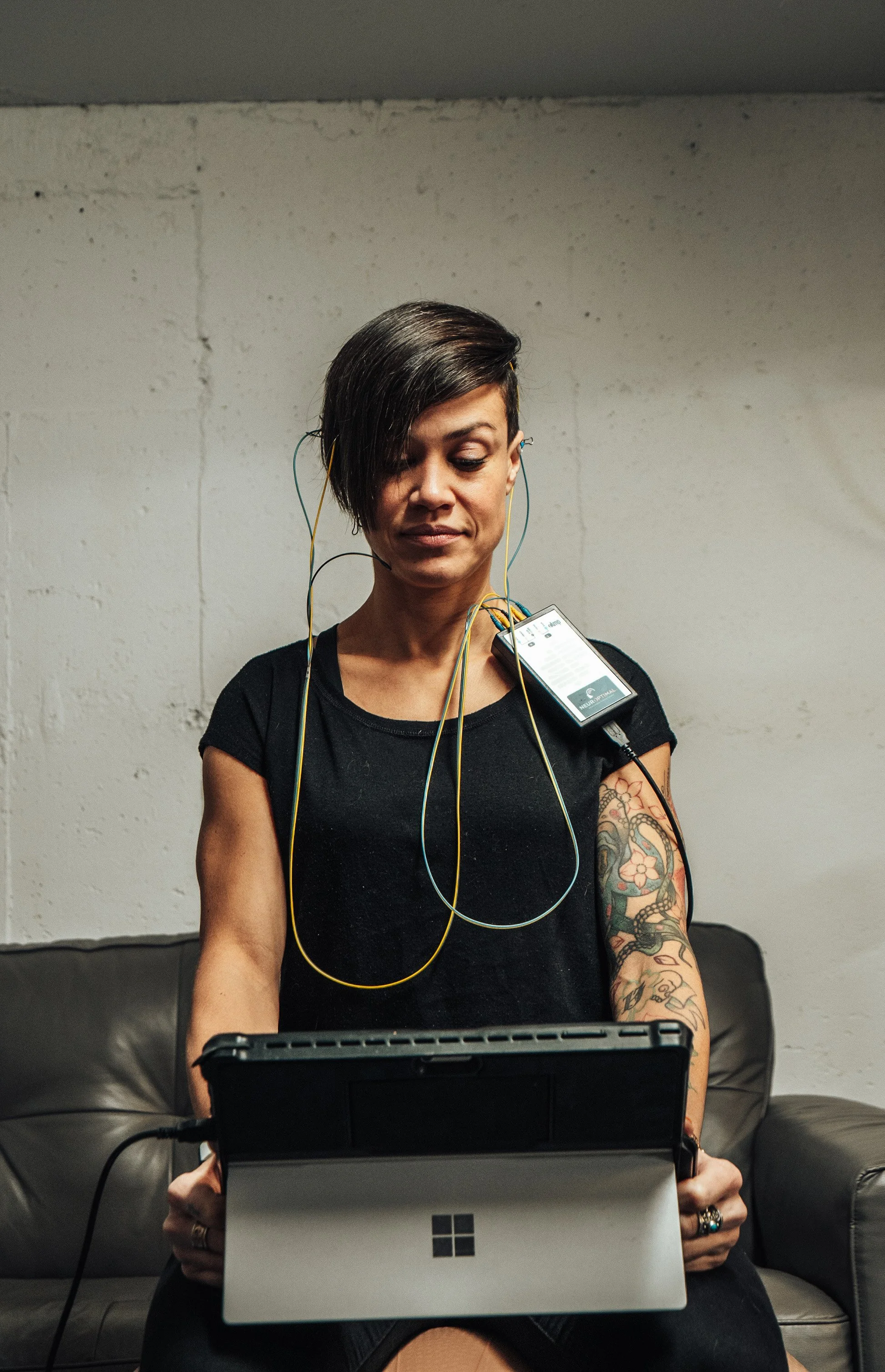
Neurofeedback for OCD works by measuring your brain's own activity and providing gentle, real-time feedback that encourages calmer, more regulated patterns over time. There's no medication and no requirement to walk through your specific obsessions or compulsions in detail. You simply relax and listen to music while your brain does the recalibrating, and many clients tell us that alone makes it feel far more approachable than they expected.
How Neurofeedback Compares to OCD Therapy and ERP
Evidence-based OCD treatment, including Cognitive Behavioural Therapy (CBT) and Exposure and Response Prevention (ERP), is typically provided by a registered psychologist or psychiatrist through structured, talk-based sessions.
Neurofeedback for OCD takes a different approach. Rather than focusing on conversation or exposure exercises, it works directly with brainwave activity to support nervous system regulation.
Some clients choose neurofeedback as their primary approach. Others use it alongside their psychologist's ERP program or other evidence-based care from an OCD specialist. If you're already working with an OCD therapist in Sydney, neurofeedback can complement that treatment. There is no need to choose one approach over the other, as many people benefit from using both as part of their overall care plan.

A Different Kind of Support
For clients seeking natural ocd support without medication, neurofeedback offers real ocd nervous system support that many find easier to commit to than they expected. Some of our clients come to us instead of an OCD clinic in Sydney with a psychologist-led service; others come alongside one.
If OCD therapy in Sydney has felt like a big first step, or OCD counselling hasn't quite been the right fit before, neurofeedback offers a different way in.

Getting Started
Your first visit is a relaxed conversation about what you're experiencing. We'll explain what to expect from OCD support sessions at our Sydney clinic and map out a path forward together.
Choosing Your Path
Executive Brain Mastery does not provide clinical diagnoses, and OCD is best assessed by a registered psychologist or psychiatrist. If you haven't had a formal assessment, it's a valuable step to take, whether before starting neurofeedback or alongside it.
If you're already seeing an OCD therapist, neurofeedback can be integrated with your existing care. We are happy to work alongside your treating health professionals to provide additional support where appropriate. Whether you choose neurofeedback as your primary approach or as part of a broader treatment plan is entirely up to you, and we're here to support you either way.

Frequently Asked Questions
-
OCD is often grouped into four broad presentations: contamination and cleaning, checking, symmetry and ordering, and intrusive thoughts (sometimes called 'pure O'). These categories can overlap, and a psychologist can help identify which patterns apply to you specifically, whether you're exploring OCD treatment in Sydney or neurofeedback specifically.
-
OCD is thought to result from a combination of genetic, neurological and environmental factors, rather than one single cause, with differences in brain circuitry involved in decision-making and threat response commonly discussed in the research. This is exactly the territory neurofeedback for OCD works in, supporting the underlying nervous system patterns directly, rather than only addressing the thoughts and behaviours on the surface, which is part of why brain training for OCD has become such a popular option locally.
-
Only a registered psychologist, psychiatrist or GP can diagnose OCD. Common signs include intrusive, unwanted thoughts paired with repetitive behaviours or mental rituals aimed at reducing distress. If this sounds familiar, a proper assessment is a great first step, whether through a GP, an OCD counselling Sydney service, or neurofeedback once you're ready.
-
OCD is generally described as manageable rather than 'cured', and many people achieve significant, lasting symptom reduction, whether through ERP, medication, neurofeedback, or a combination. We've seen clients make meaningful progress with neurofeedback for OCD as their main approach, and we're always honest about what to realistically expect, whether you're after natural ocd support or a more traditional path.
-
Evidence-based OCD treatment includes approaches like Cognitive Behavioural Therapy (CBT) and Exposure and Response Prevention (ERP), usually delivered by a registered psychologist, sometimes alongside medication. Neurofeedback for OCD offers a different, non-invasive path, working directly with brainwave patterns. Many clients choose it as their main approach; others add it alongside their psychologist's ERP program, and many find it offers real ocd nervous system support along the way.
-
OCD is classified as a distinct condition but shares strong links with anxiety disorders, and the two often occur together. A GP or psychologist can help clarify the specific pattern for your situation, which is also worth raising if you're researching an OCD clinic Sydney offers, since anxiety-focused and OCD-focused care often overlap. Considering the well documented efficacy of neurofeedback for anxiety brings additional improvements to your overall wellbeing journey.
-
Research suggests OCD has a genetic component, since it tends to run in families, though environmental factors also play a role. It's not caused by a single gene, and having a family member with OCD doesn't mean you'll definitely develop it. An OCD specialist in Sydney can talk you through your specific risk factors in more depth if that's something you'd like to explore.
Let’s Work Together